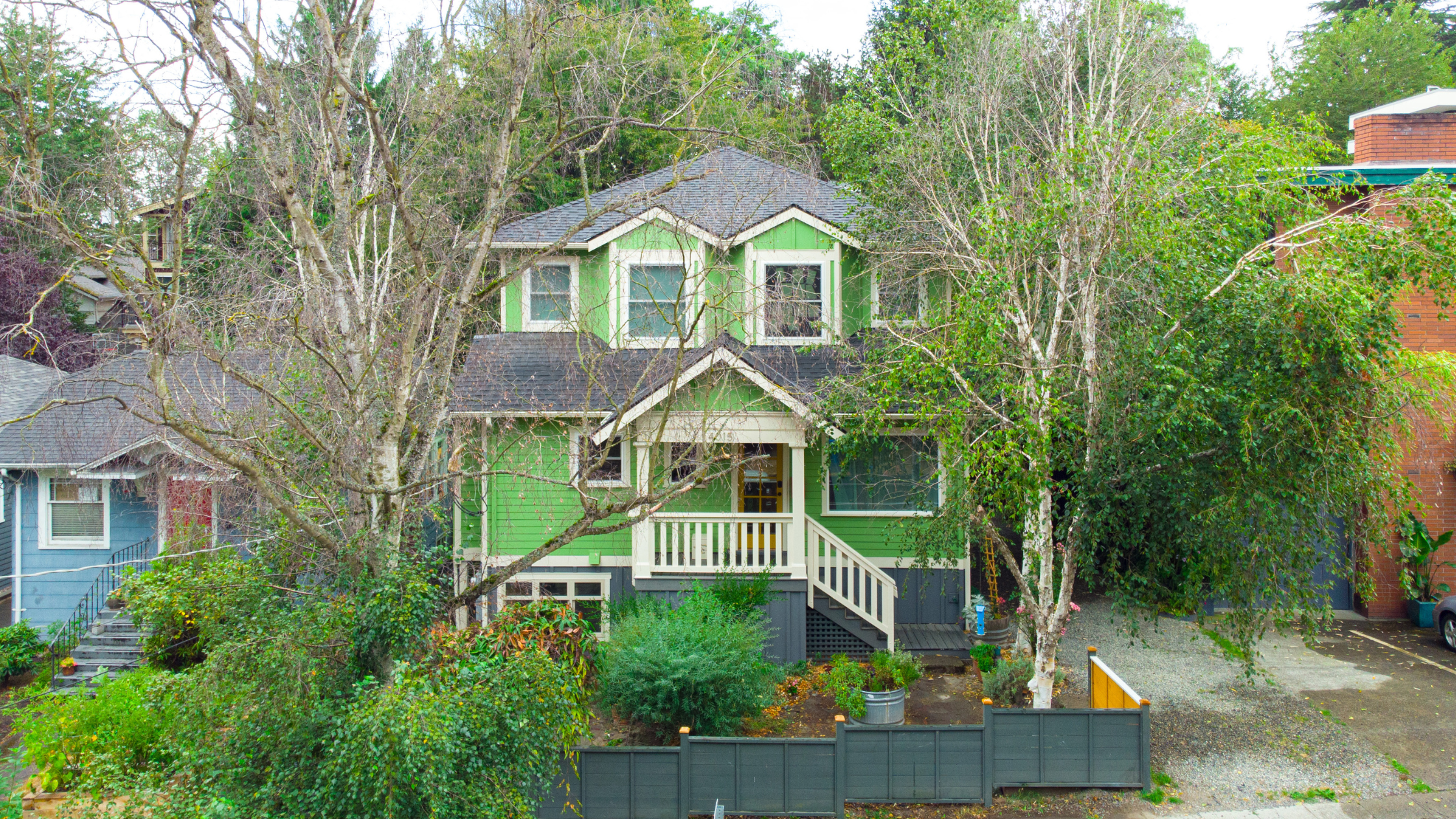

Featuring Architectural Designer Steven Long of Longhouse Design Studio. A trusted Better Builders partner, Steven specializes in residential design that balances timeless aesthetics with modern functionality. He also brings extensive expertise in zoning and permitting, helping homeowners navigate the gap between their vision and what local regulations allow.
"Can We Even Do This?" Why Feasibility Comes First
That's the question most homeowners are quietly sitting with before they say anything else. Not "what will it look like?" or "how long will it take?" but whether adding onto their home is even possible given where they live, how their lot is configured, and what they have to spend. Whether you're planning a full remodel, a room addition, or a second-story expansion, the feasibility question comes first.
It's the right place to start. Complexity doesn't mean impossibility, but it does mean that understanding what's actually achievable before you fall in love with a plan is the single most important step in any home addition project.
Feasibility covers a lot of ground. Is this addition physically possible given the homeowner's needs, the jurisdiction's rules, the lot type and size, and the budget? Each of those variables carries weight, and they interact with each other in ways that aren't always obvious. You can often research the basic zoning requirements on your own, but the nuances of how those rules are applied in practice are where professional experience earns its keep. What first seems impossible can sometimes be accomplished through the eyes of a seasoned design professional. And what looks simple on paper can unravel quickly without one.
Before any design direction is established, a thorough feasibility review should tell you what's buildable on your specific property and whether the project as envisioned aligns with your budget. Those two things, physical feasibility and financial feasibility, need to be evaluated together from the very beginning.
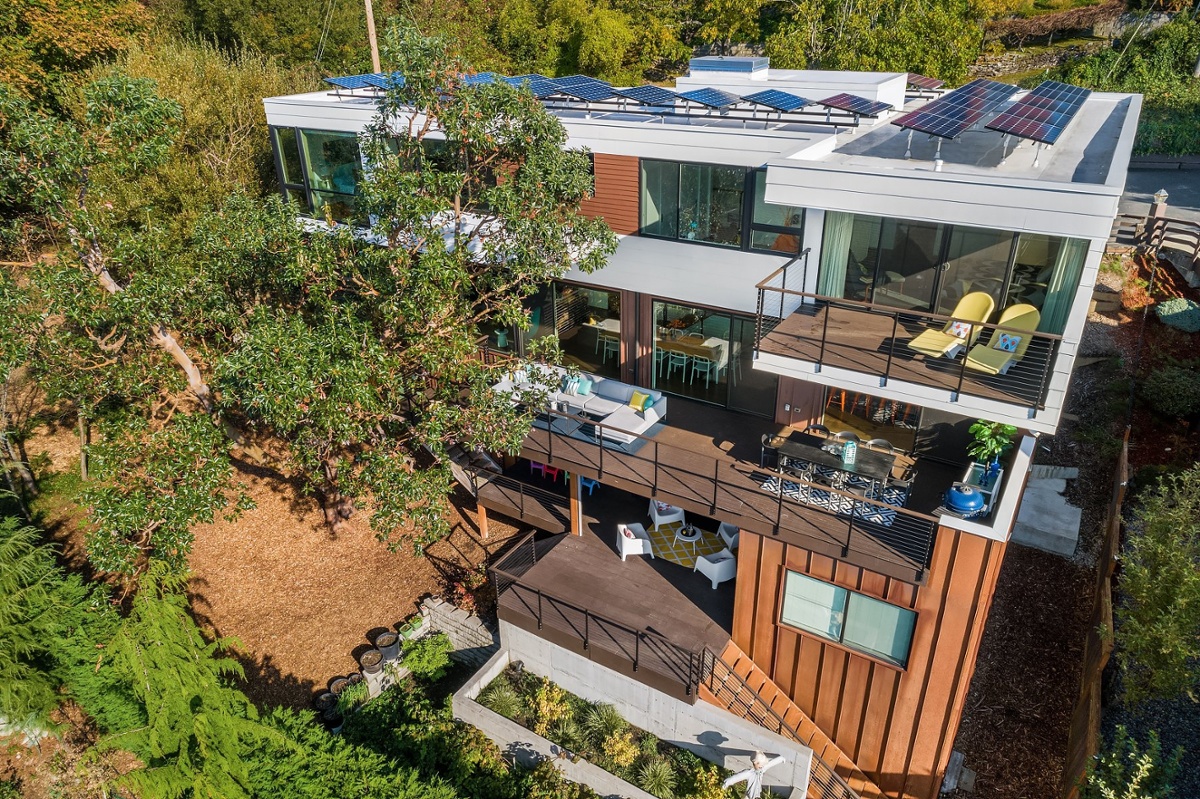 Why Zoning Feels So Confusing
Zoning is the framework of land use rules that determines what can be built, where it can be built, and how large it can be. Every jurisdiction has its own version, and even within a single city, the rules can shift meaningfully from one block to the next. The city of Seattle is a useful baseline for this conversation, but keep in mind that the specifics vary considerably across cities and counties.
What follows is a plain-language walkthrough of the zoning concepts that matter most for home addition projects. Steven Long, who handles zoning and permitting through Longhouse Design Studio, describes these as the first things he evaluates on every project. They define what's possible before a single design decision gets made.
How Setbacks Limit Where You Can Build on Your Property (and Why They Matter Early in Design)
A setback is the minimum required distance between a property line and where you're allowed to build. Think of it as a buffer zone: the space between the property line and the setback line is off-limits for new construction.
In many Seattle neighborhoods, the front yard setback is currently 15 feet, meaning no structure taller than 36 inches can be built within the first 15 feet of the property line. There are exceptions, including structures that are "grandfathered in," which means you may be able to replace an existing non-conforming structure within kind (matching what's already there) even if it doesn't conform to today's setbacks.
Setbacks vary by jurisdiction and change over time, which is part of why working with someone who actively tracks these details matters. Early in the process, a site plan is prepared to map your property's constraints, and that document becomes the foundation for the permit application and plan review that follows.
How Lot Coverage Limits Shape What You Can Actually Build
Lot coverage refers to how much of a lot can be covered by structures, specifically roofs and decks more than 36 inches off the ground.
In Seattle, a single-family home is generally limited to 50% lot coverage. That ceiling has recently increased from 35% to allow for middle housing and higher density. Other jurisdictions calculate this differently; some factor in impervious surfaces more broadly. This is one more place where local knowledge is essential.
When Height Limits Become a Problem (and How to Plan Around Them)
Height limits are zone-dependent. Standard neighborhood residential zoning in Seattle allows a 32-foot height limit, plus an additional 5 feet for pitched roofs.
If you're adding a rooftop deck, a certain amount of square footage is permitted above the height limit to accommodate a covered stair. Second-story additions and roofing changes are common triggers for height-limit review, since any work that raises the roofline requires confirming that the final height remains within the zone's limits.
Accessory structures, such as detached garages, have a 12-foot height limit and their own restrictions and exceptions for exceeding it.
Why Floor Area Ratio (FAR) Often Limits Your Home More Than You Expect
Floor area ratio is Seattle's way of controlling how much conditioned floor space (livable area, not garages or sheds) can exist on a lot relative to its size.
The intent is to prevent oversized homes from disrupting the scale and character of existing neighborhoods. Think of it as a citywide version of an HOA rule about building mass.
FAR ranges today sit roughly between 0.6 and 1.2, meaning the allowable floor area is calculated as a multiplier of the lot size. A 5,000 square foot lot could have up to 3,000 square feet of floor area at a 0.6 FAR. This is a constantly moving target, particularly as middle housing legislation continues to reshape what's allowed.
How Tree Protection Rules Can Impact Your Design and Timeline
Seattle takes its trees seriously. Both street trees and trees on private property are protected, and while permits to remove significant trees do exist, they're expensive, time-consuming, and generally discouraged. A protected tree has a radius of protection around it, typically measured by its drip line, which is the outer edge of where the canopy extends. While we appreciate how strongly Seattle protects its trees, navigating that process can be more involved than most homeowners expect.
This isn't theoretical. We're currently working with a client whose historic Sequoia tree is undermining the retaining wall at the front of her property. The wall abuts a public sidewalk, creating a genuine safety concern. Even so, the process to get a permit to simply stabilize (not replace) the wall has required a geotechnical engineer and a certified arborist to document the situation. Trees come first in Seattle, which is why designing around them requires both creativity and patience.
What to Expect If Your Property Has Environmentally Critical Areas (ECAs)
A steep slope, a wetland, and poor soils: these are examples of environmentally critical areas, and they carry their own set of requirements. ECAs typically impose additional setbacks and buffer zones, and they often require geotechnical reports, land surveys, and sometimes environmental consultants who will document the conditions on your lot in detail. They can also affect the structural integrity of an existing home or what's required for a new foundation.
If your property has an ECA, expect the work upfront to be more involved. Stormwater management is a common requirement on ECA sites, and sustainability considerations often shape how drainage and grading are handled. The goal is to fully understand the impact your project will have on that area before construction begins.
Why Shoreline Properties Require a Completely Different Level of Planning
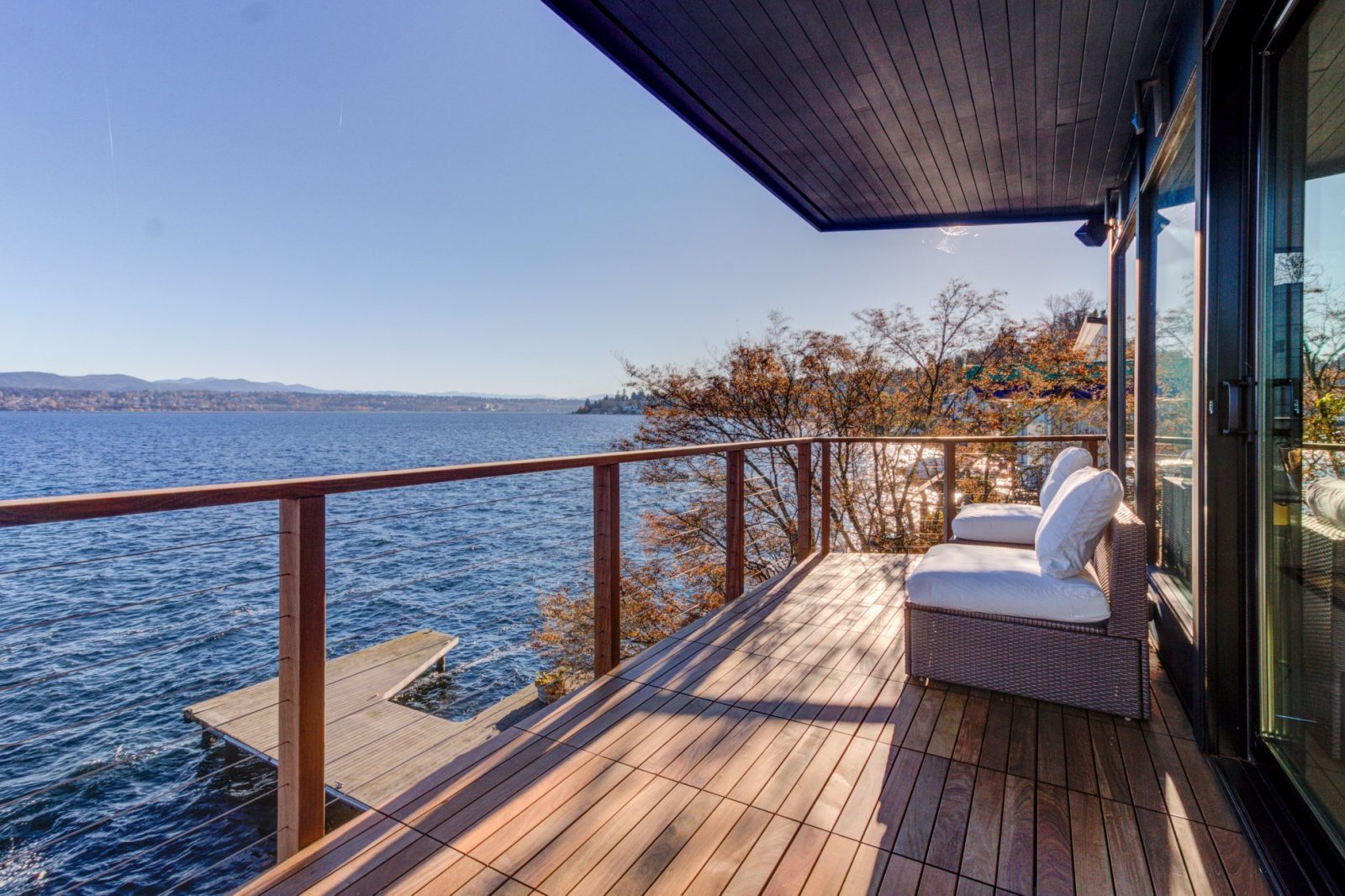
Shoreline properties are in a category of their own. Washington State is strict about developments near shorelines, and the Shoreline Management Act's underlying goal is to maintain existing conditions and, where possible, restore them to pre-development conditions.
Shoreline permits are the most difficult to obtain. They're achievable, but the process is longer and more costly, and the scope of work matters enormously. Redoing a kitchen is a very different conversation from building a new structure. Even relatively modest interior work may require going through an exemption permit process just to confirm that nothing triggers shoreline review.
Here's a real example of how this can unfold: a client on a Seattle shoreline decided to gut their home down to the studs. That decision triggered a "substantial alteration" under shoreline rules. Because the property also had environmentally critical areas (common on shoreline lots), they were required to bring the entire house and its existing foundation up to current code: underpinning, flood-proofing, and multiple additional construction permits. Each permit required its own submittal, its own permit review cycle, and its own timeline. A project they originally scoped at a certain cost grew to nearly six times that figure. A phased approach over time, taking on less at once, may have avoided triggering the substantial alteration threshold entirely.
 How Zoning Varies: City, Neighborhood, and Lot
Even within a single jurisdiction, zoning is rarely uniform. Two homes on the same street can face entirely different constraints based on their specific lot conditions, overlay designations, and history.
City to City: Seattle, Bellevue, Kirkland, and unincorporated King County all operate under their own codes, and the residential code requirements that govern a renovation or addition project in one jurisdiction may look very different from those in another. As a general pattern, larger cities with more development pressure tend to have more complex and restrictive zoning. The east side jurisdictions, with their proximity to lakes and significant environmental features, often add additional layers of complexity. Complex projects that span multiple permit types are especially sensitive to these jurisdictional differences. Some municipalities are known within the design-build community for being particularly demanding, not necessarily because the rules are stricter on paper, but because interpretation and enforcement are more exacting in practice.
Neighborhood Overlays: A neighborhood overlay is a local zoning tool that adds an extra layer of rules on top of a city's base zoning code for a specific geographic area. It doesn't replace the underlying zoning; it modifies or adds to it. Overlays are typically used to preserve neighborhood character, manage growth around transit corridors, protect historic assets, or address specific environmental conditions. In practical terms, an overlay might restrict building height further than the base zone allows, require exterior materials to match the surrounding neighborhood, limit lot coverage or FAR, or change parking requirements entirely.
This is why a single block can contain homes with meaningfully different buildable footprints and height limits. If you're in an overlay zone, you're subject to both sets of rules simultaneously.
Lot-Specific Conditions: All of the above, setbacks, lot coverage, height, FAR, ECAs, and shoreline rules apply to your specific parcel. A steep slope on one corner of your lot may shift where an addition can go. A protected tree may limit your buildable footprint. A soil condition may change what kind of foundation is required.
The combination of these factors is what makes zoning genuinely complex, and why the answer to "can we do this?" almost always requires looking at the specific lot before anyone can say yes or no with confidence.
 Common Permit and Zoning Misconceptions Worth Clearing Up
A few beliefs come up regularly in early conversations with homeowners:
1. "If my neighbor did it, I can too."
Not necessarily. Different lots, different overlays, different timelines. Your neighbor's addition may have been built before certain rules changed, or their property may simply have different constraints than yours.
2. "It's just adding square footage."
Square footage is exactly what zoning regulates. FAR, lot coverage, and setbacks all exist to control how much and where you can add. "Just adding" often means navigating every one of these rules, and projects that grow living space can also trigger HVAC upgrades, permit fees for each affected system, and a full plan review.
3. "We'll figure out permits later."
This is the most costly assumption in home addition projects. Permit requirements shape design decisions, budget, and timeline. Discovering a requirement mid-construction is exponentially more expensive than understanding it before a wall goes up.
4. "If it's inside, it doesn't matter."
Interior work that affects structure, energy systems, or egress can absolutely trigger permit requirements. And on shoreline properties, even purely interior structural changes can require bringing far more of your home up to current code than you planned.
5. "It's my house, I can do whatever I want."
Zoning and building codes exist at the jurisdiction level, regardless of ownership. The rules apply to the property, not just to the person who holds the title.
Clarity Creates Confidence
You don't need to know every code. You need a team that does.
The point of understanding all of this isn't to overwhelm; it's to explain why the answer to "can we do this?" requires more than a quick look at comparable homes in the neighborhood. Zoning is local, specific, and constantly evolving. A home addition that was buildable under last year's rules may be subject to new requirements today, and one that seems impossible may have a path forward that only becomes visible with experience.
A thorough feasibility review, completed before design begins, is how a good design-build team confirms what's possible, what's realistic, and what it will actually cost to get there. That's the foundation everything else builds on.
Ready to understand what's possible for your home? Download the Home Addition Handbook for a comprehensive guide to planning your project from feasibility through construction.

Frequently Asked Questions About Home Addition Permits and Zoning
What permits are needed to build an addition?
Most home additions require a building permit, which typically encompasses energy code compliance, structural review, and stormwater and drainage considerations. Depending on the scope, separate construction permits covering mechanical, electrical, and plumbing work may also be required. A permit application is submitted for each, though these are often pulled by the relevant subcontractors as part of the broader project.
Do I need a permit for a home addition in Washington State?
Yes, in virtually all cases. Any addition that involves structural changes, including modifying load-bearing walls, adding a roof, or expanding the building envelope, requires a building permit. The specific process and timeline vary by jurisdiction, but no reputable contractor should proceed without one.
How big can a home addition be in Seattle?
What is required for a detached ADU on my lot? A detached ADU (DADU) is subject to its own size and height limits, which have been evolving significantly as Seattle works through middle housing legislation. Generally, you'll need a building permit, and the project is subject to setback, lot coverage, and FAR requirements. Height limits for DADUs can range from 12 to 32 feet, depending on configuration. An upfront feasibility review is the best way to understand what's realistic on your specific parcel.
How do zoning laws affect home addition plans?
Zoning laws define where on your lot you can build, how tall the addition can be, how much of the lot it can cover, and how much total floor area is allowed. They are the primary constraint that shapes what's architecturally possible before design even begins.
What happens if you don't get a permit for an addition?
Unpermitted work creates serious problems. It can affect your ability to sell the home, void homeowner's insurance coverage for that work, and result in stop-work orders or required demolition if discovered. On shoreline properties, proceeding without a permit can trigger far more extensive remediation requirements than the original project would have involved.
How long does the permit process take?
It depends on the jurisdiction and the complexity of the project. Simple over-the-counter permits in Seattle can be resolved the same day. Complex additions involving ECAs, shoreline review, or substantial alterations can take months to years. Building this timeline into your project planning from the start is essential.




.png)